
False ceilings have become a popular choice in contemporary homes and offices for adding elegance and practicality. Simply put, a types of false ceiling allow designers to create modern, visually appealing spaces while hiding structural elements. They provide a clean, finished look, improve lighting possibilities, and can even influence room comfort. With multiple options available, understanding the types of false ceiling materials can help you plan spaces that are both functional and stylish, making interiors stand out effortlessly.
What Is False Ceiling
A false ceiling is a secondary ceiling installed below the main structural ceiling. It is suspended using a framework, creating a gap that can conceal wiring, ducts, or pipes. False ceilings also allow for recessed lights, cove lighting, and decorative patterns, adding depth and sophistication to a room. Beyond aesthetics, they can enhance thermal insulation, reduce noise, and conceal imperfections in the original ceiling, providing both functional and design benefits in modern interiors.
Why Choose a False Ceiling
Installing a false ceiling is not just about looks. The advantages of a false ceiling include enhancing room aesthetics, offering better sound insulation, and providing options for modern lighting. They also help hide unsightly wires, plumbing, and ducts, giving interiors a clean and organised appearance. Additionally, false ceilings contribute to temperature regulation, making spaces more energy-efficient while adding an elegant finishing touch that complements furniture and décor.
Types of False Ceiling
Choosing the right ceiling material can transform the ambiance and style of a room. Here are the most popular types of ceiling materials:
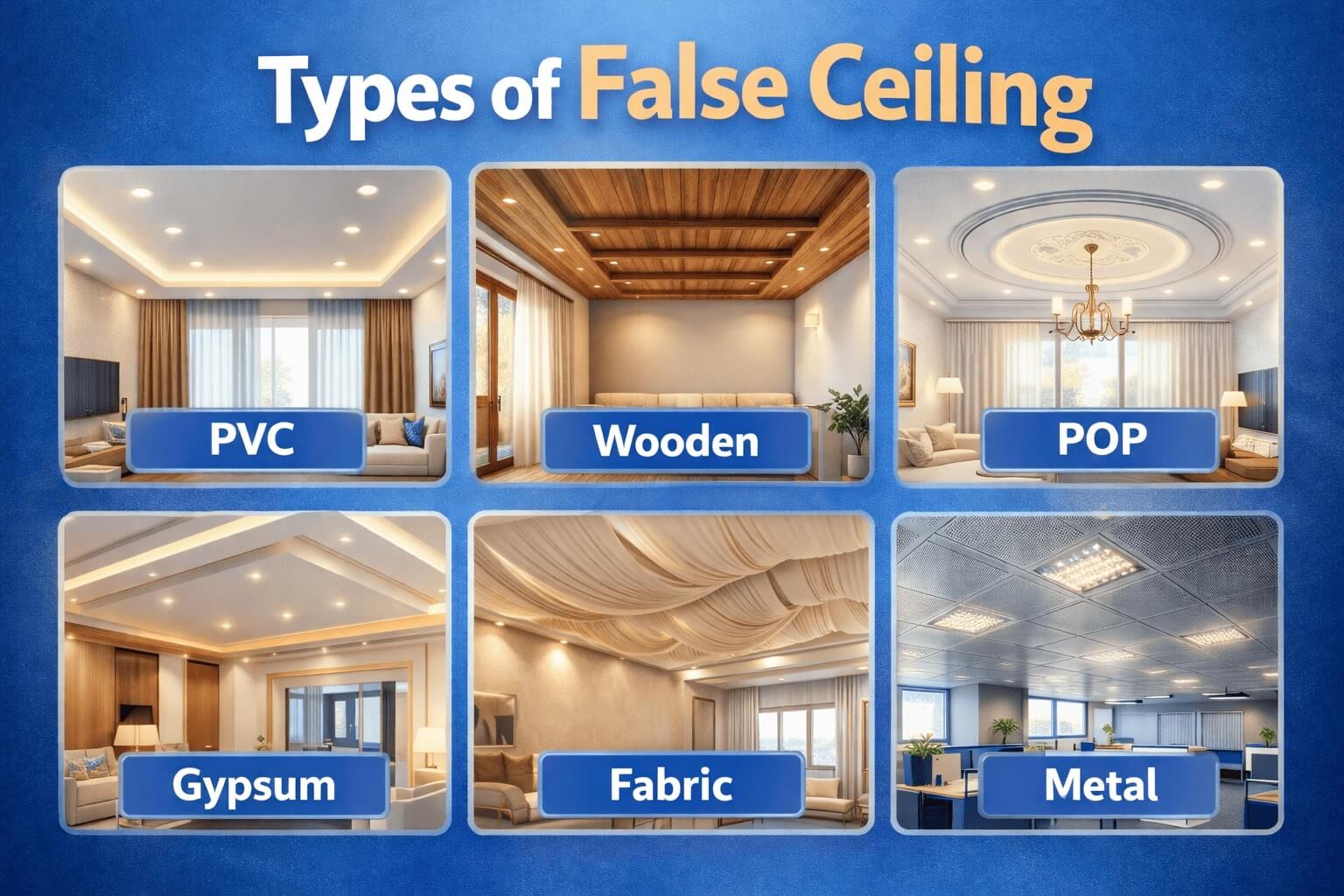
1. Gypsum False Ceiling
Gypsum ceilings are lightweight, fire-resistant, and provide a smooth, modern finish. They are ideal for living rooms and bedrooms, allowing recessed or indirect lighting designs.
2. POP False Ceiling (Plaster of Paris)
POP ceilings are versatile for decorative patterns, curves, and custom designs. They offer a luxurious appearance but require skilled installation to maintain durability and finish.
3. Wooden False Ceiling
Wooden ceilings give a warm, natural look perfect for living areas or luxury interiors. While aesthetically pleasing, they need regular maintenance in humid environments to retain beauty.
4. Metal False Ceiling
Durable and long-lasting, metal ceilings are common in offices and commercial spaces. They are easy to maintain and resistant to wear, providing a sleek, professional look
5. PVC False Ceiling
PVC ceilings are lightweight, cost-effective, and moisture-resistant. Ideal for kitchens, bathrooms, or areas prone to humidity, they are easy to install and maintain.
6. Fabric or Cloth False Ceiling
Fabric ceilings create a soft, decorative touch, often used in entertainment or creative spaces. Though less common in homes, they allow unique designs and sound absorption.
7. Mineral Fiber Ceilings
Mineral fiber ceilings are excellent for sound absorption and are resistant to mold and moisture. They are suitable for study rooms, offices, or areas requiring noise control.
8. Glass False Ceiling
Glass panels create bright, open spaces with a luxurious effect. They work best with lighting features, adding elegance to living rooms or entryways.
False Ceiling Types Based on Design
The design of a false ceiling can drastically affect a room’s look and functionality. Here are common ceiling types:
- Single-layer ceiling: Simple and budget-friendly, suitable for standard rooms.
- Multi-layer ceiling: Adds depth and allows creative lighting layouts.
- Coffered ceiling: Features recessed panels, giving a luxurious, architectural appeal.
- Cove lighting ceiling: Conceals lighting sources, creating soft, ambient illumination.
How to Choose the Right False Ceiling
Selecting the perfect ceiling requires understanding your space, budget, and design needs. Knowing the different types of false ceiling makes it easier to pick one that suits both function and style.
Room Type and Usage
The type of room determines the best ceiling option. Living rooms and bedrooms work well with gypsum or POP ceilings for a polished, modern look. Kitchens, bathrooms, and utility areas need moisture-resistant materials like PVC or metal to ensure durability and long-lasting performance. Matching the ceiling type with room use ensures both comfort and elegance.
Budget Considerations
False ceilings come in a wide range of prices depending on the material and design. PVC or gypsum options are cost-effective, while POP, wood, or glass can be more expensive due to design flexibility or premium finishes. Planning your budget in advance helps you select a ceiling that balances style and affordability.
Climate and Moisture Levels
Humidity and temperature affect ceiling durability. Materials like POP or gypsum may warp in damp conditions, whereas PVC, metal, or treated wood can withstand moisture and maintain their appearance. Considering the local climate ensures your ceiling stays intact and looks great for years.
Maintenance Needs
Different materials require different levels of care. Wooden and POP ceilings need regular maintenance and occasional polishing, while gypsum, metal, and PVC require minimal effort. Choosing a ceiling that suits your maintenance preferences saves time and keeps interiors looking fresh.
Common Mistakes to Avoid
Avoiding these pitfalls ensures your false ceiling is both stylish and functional.
- Choosing Design Over Practicality: Focusing only on elaborate designs can compromise functionality. A visually stunning ceiling might look great on paper but may not suit the room’s height, lighting, or purpose. Always balance aesthetics with usability to avoid regrets later.
- Ignoring Ceiling Height: A low room needs simpler designs. Installing multi-layered or heavy materials in such spaces can make the room feel cramped. Considering the height before selecting a ceiling ensures comfort and openness.
- Poor Lighting Planning: Ceilings aren’t just decorative—they shape how light works in a room. Neglecting lighting placement or the type of ceiling material can reduce brightness or create harsh shadows. Plan lighting along with material choice for a well-lit, inviting space.
False Ceiling for Different Rooms
Each room has unique needs, so choosing the right ceiling enhances both style and functionality.
- Living Room: For living areas, gypsum or wooden ceilings are the best options. They provide elegance, complement furniture, and allow layered or indirect lighting for a cozy and modern ambiance.
- Bedroom: Bedrooms benefit from POP or fabric ceilings that create a soft, calming environment. These designs also help with sound insulation, making the space peaceful and relaxing.
- Kitchen: Kitchens need moisture-resistant options like PVC or metal panels. These ceilings withstand humidity, are easy to clean, and maintain durability in high-activity areas.
- Office or Workspace: In offices, gypsum or metal ceilings are practical and professional. They provide a clean, organized look, integrate lighting efficiently, and require minimal maintenance for busy workspaces
Conclusion
False ceilings do more than decorate a room—they add both style and functionality. Choosing the right design, material, and layout can improve aesthetics, optimise lighting, and create a comfortable environment for living or working. With careful planning and an understanding of available options, any space can feel modern, elegant, and well-organized without compromising practicality.
FAQs
Which false ceiling is best for homes?
Gypsum ceilings are versatile, durable, and suit most residential spaces.
Is gypsum better than POP?
Gypsum offers more moisture resistance and durability, while POP allows creative design flexibility.
Which false ceiling lasts the longest?
Metal and gypsum ceilings generally have the longest lifespan.
Are false ceilings expensive?
Costs vary depending on material, design, and area; PVC is budget-friendly, wood and custom POP can be costlier.