

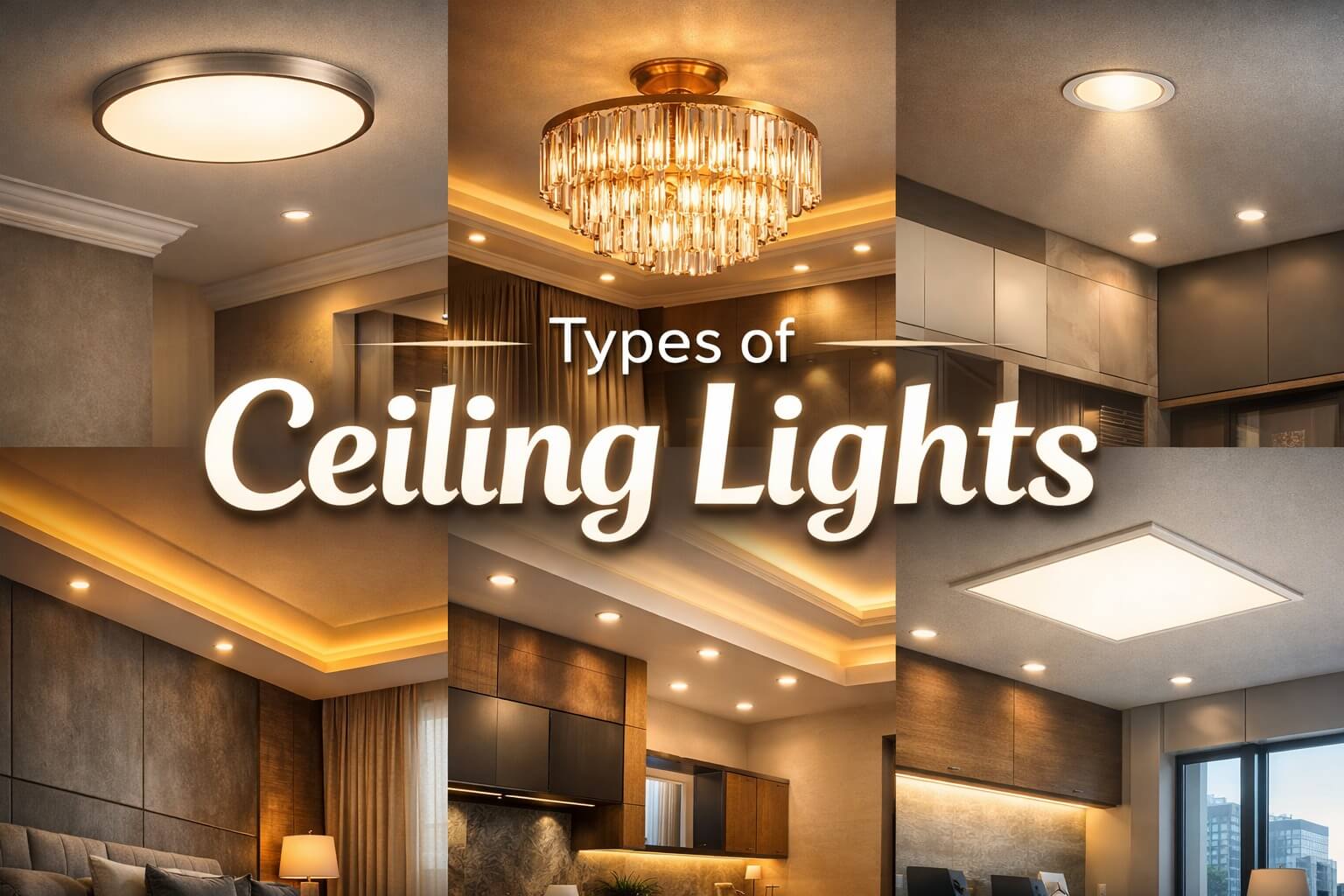
Ceiling lights can make or break how a home looks and feels. They affect brightness, comfort, and the overall mood of every room.
Choosing the right option from the many types of ceiling lights available today can be daunting. This guide will help you understand your ceiling light options and how to use them to enhance your interiors.
Why Choosing the Right Ceiling Light Matters
Choosing the right ceiling light does more than just brighten a room. It plays an important role in creating the right ambience and influencing the overall mood of the space.
Good lighting supports everyday activities such as reading, cooking, and working by giving the right amount of light exactly where it is needed. It also helps rooms feel more open, balanced, and visually pleasing, especially when the light placement suits the room layout.
The impact of ceiling lighting depends on factors such as ceiling height, room size, and overall design, and it works best when the lighting style matches how the room is used day to day.
Main Types of Ceiling Lights
Ceiling lights come in many forms, each serving a specific purpose based on ceiling height, room size, and lighting needs.
Flush Mount Ceiling Lights
Flush-mount ceiling lights fit closely against the ceiling, which makes them ideal for small rooms and spaces with low ceilings. These lights are often used in rooms where practical and efficient lighting is important. Many homeowners choose them in clean shapes, such as rectangular ceiling light designs, to create a tidy and modern appearance.
Semi-Flush Mount Ceiling Lights
Semi-flush mount lights are fixed slightly below the ceiling, leaving a small gap between the fixture and the surface. This gap helps the light spread more evenly across the room and makes the space brighter than flush-mounted lights. Many people choose them as simple designer ceiling lights that add visual interest without taking attention away from the rest of the room.
Chandeliers
Chandeliers are decorative ceiling lights that create a strong visual effect and naturally draw attention upward, making them perfect for rooms with high ceilings. They act as statement lights and help define formal areas like dining rooms and entryways.
Pendant Lights
Pendant lights hang from the ceiling and shine light on certain areas rather than the whole room. They can be used alone or in groups and are great for brightening dining tables, kitchen islands, or reading corners. A well-placed pendant often functions as a fall ceiling light, offering both functional lighting and visual interest.
Recessed Ceiling Lights
Recessed ceiling lights or concealed ceiling lights fit directly into the ceiling, creating a neat and clutter-free look. They give even lighting and are perfect for modern interiors that prefer clean lines. These lights are often used in living rooms and bedrooms, where a soft and subtle effect is desired.
Track Lighting
Track lighting systems have adjustable fixtures fixed on a track, letting you direct light exactly where it is needed. This makes them ideal for highlighting specific areas and often acts as a strong focus light.
Cove Lighting
Cove lighting is placed along recessed edges of the ceiling, creating a soft and indirect glow that improves the room’s atmosphere. Its hidden position and concealed light features add depth to ceilings and work especially well with false ceiling designs.
Panel Lights
Panel lights offer wide and uniform brightness through a flat and minimal structure. They distribute light evenly across the room and are commonly used in kitchens, workspaces, and utility areas. Their clean appearance and efficiency make them a popular choice among modern ceiling lights for functional spaces.
Spotlights
Spotlights give focused beams that highlight certain areas or objects in a room. Perfect for adding contrast and interest, these lights are commonly paired with roof LED lights to enhance feature walls, artwork, or décor sections.
Types of Ceiling Lights by Room
Different rooms need different lighting approaches based on how the space is used.
Living Room Ceiling Lights
Living rooms work best with layered lighting that supports both relaxation and social activities. Recessed lights usually provide base illumination, while cove lighting adds warmth and depth to the space.
A statement fixture placed centrally enhances the overall style and anchors the room visually. Many homeowners complete this setup with fancy ceiling lights to bring personality and elegance without overpowering the décor.
Bedroom Ceiling Lights
Bedrooms need calm and comfortable lighting that supports relaxation. Warm light tones work best as they create a soothing environment. Flush-mount fixtures combined with cove lighting offer balanced illumination while keeping glare low. Harsh brightness should be avoided, and many modern interiors prefer false ceiling lights for bedroom designs to maintain softness and visual harmony.
Kitchen Ceiling Lights
Kitchen lighting must support visibility and safety, especially in work zones. Bright, shadow-free illumination ensures ease during cooking and preparation. Panel lights usually provide overall brightness, while pendant lights work well above counters and islands. Functional and efficient LED ceiling lights for homes are widely used in kitchens due to their clarity and energy efficiency.
Dining Area Ceiling Lights
Dining areas require focused yet gentle lighting that enhances comfort during meals. Warm light placed directly above the table helps define the dining zone and creates an inviting atmosphere. Pendant lights and chandeliers are common choices, as they balance function with style. Many dining spaces feature fall ceiling LED light fixtures to add visual interest and focused illumination.
Bathroom Ceiling Lights
Bathroom lighting needs to be safe, clear, and evenly distributed. Moisture-resistant fixtures are essential to ensure durability. Bright and uniform lighting supports grooming tasks, while recessed lights or flat panels keep the ceiling uncluttered. Modern bathrooms often rely on profile ceiling lights to achieve a clean look with efficient illumination.
How to Choose the Right Ceiling Light
Choosing the right ceiling light can transform a room, making it both functional and visually appealing. Here’s a guide to help you select lighting that fits your space and needs.
Ceiling Height and Room Size
The height of your ceiling and the size of the room play a big role in deciding which ceiling lights to use. Low ceilings work best with flush-mount ceiling lights or recessed ceiling lights, while higher ceilings can accommodate chandeliers or semi-flush mount lights for better visual impact.
Ambient vs Task vs Accent Lighting
Understanding the function of lighting is key. Ambient lighting provides overall brightness, task lighting focuses on work areas like kitchens or study zones, and accent lighting highlights features such as artwork or shelves. Many homes use layered ceiling lights to combine these functions seamlessly.
Warm White vs Cool White
The colour temperature affects the mood and usability of a room. Warm white light creates a cozy and relaxing atmosphere, ideal for bedrooms and living rooms, while cool white light improves visibility for kitchens, bathrooms, and workspaces. Choosing the right tone ensures comfort and clarity.
LED Options for Energy Savings
LED ceiling lights for homes are energy-efficient, long-lasting, and cost-effective. They are available in different styles, from panel lights to recessed ceiling lights, providing both functional and decorative lighting while lowering electricity bills.
Placement and Spacing for Even Brightness
Proper placement and spacing of ceiling lights ensure uniform brightness and avoid dark spots. For larger rooms, combining recessed lights, track lighting, or cove lighting helps distribute light evenly. Always plan placement according to room layout and activities for the best results.
Common Mistakes to Avoid When Choosing Ceiling Lights
Selecting the right ceiling lights can make a big difference, but mistakes in design, placement, or brightness can ruin the effect. Here are common errors to watch out for.
- Focusing only on the aesthetics without considering brightness can leave a room underlit.
- Using too many bright ceiling lights in small spaces can make the room feel harsh and cluttered. For compact areas, flush-mount ceiling lights or recessed ceiling lights are ideal to maintain a clean, well-lit look without overwhelming the space.
- Selecting the wrong light colour can affect mood and usability. Warm white lights are best for bedrooms and living rooms, while cool white lights suit kitchens, bathrooms, and workspaces.s
- Incorrect placement of ceiling lights can create unwanted shadows, making rooms feel unevenly lit.
- Combining too many different ceiling light styles in one room can look chaotic. Stick to a consistent design approach.
LED Ceiling Lights vs. Traditional Lighting
Choosing the right ceiling lights affects energy use, maintenance, and longevity. LED ceiling lights for homes offer several advantages over traditional lighting options.
LED Lasts Longer
LED ceiling lights can last 25,000-50,000 hours, which is many times longer than traditional incandescent or fluorescent bulbs. Traditional lights burn out faster, requiring frequent replacements, while LEDs provide reliable, long-lasting illumination for spaces like living rooms, kitchens, and bedrooms.
Better Energy Efficiency
LED lights use up to 80% less energy than traditional lighting. This means lower electricity bills while maintaining the same brightness. Traditional bulbs consume more power and produce extra heat, making LEDs the more energy-efficient and eco-friendly choice for modern ceiling lights.
Lower Maintenance vs Traditional Fixtures
Because LED ceiling lights last longer and are more durable, they need much less maintenance. Traditional lighting requires regular bulb changes and careful handling, especially in high ceilings or hard-to-reach areas. With LEDs, homeowners get consistent light with minimal upkeep.
Choose Your Lighting Confidently
The best ceiling lighting choices are those that balance comfort, design, and everyday usability. A thoughtful mix of ambient, task, and accent lighting helps rooms feel complete and well planned. When lighting works in harmony with space and purpose, it creates interiors that feel welcoming, functional, and visually refined.
FAQs
What is the best type of ceiling light for low ceilings?
Flush-mount ceiling lights or recessed ceiling lights work best for low ceilings, providing even illumination without crowding the space.
Which ceiling light is best for living rooms?
Layered ceiling lights work well in living rooms, combining recessed lights, cove lighting, and a central statement fixture for style and brightness.
Are LED ceiling lights better than traditional lights?
Yes, LED ceiling lights for homes last longer, save energy, need less maintenance, and offer more design options than traditional bulbs.
How many ceiling lights do I need in one room?
The number of ceiling lights depends on room size, ceiling height, and lighting layers for balanced ambient, task, and accent lighting.
Which ceiling lights are best for false ceilings?
Recessed lights, cove lighting, and panel lights are ideal for false ceilings, giving seamless, modern, and evenly distributed illumination.