
If you have ever planned a kitchen, wardrobe, or custom furniture, you have likely faced a common dilemma: plywood vs. plyboard — what should you choose? Many homeowners hear these terms from carpenters or showroom staff but rarely get a clear explanation, so decisions often come down to price rather than performance.
Difference Between Engineered Wood and Plywood: A Common Confusion
In everyday interior conversations, homeowners often hear plywood and engineered wood used as if they are two separate materials. Technically, this isn’t accurate.
Plywood itself is a type of engineered wood, since it is manufactured by bonding multiple layers of wood veneer under pressure.
However, in the Indian interiors market, the term engineered wood is commonly used to refer to non-plywood boards such as MDF, HDF, and particle board. These materials are engineered using wood fibres or particles rather than full veneers.
When people search for the difference between engineered wood and plywood, they are usually comparing plywood vs MDF or particle board.
What Is Plywood?
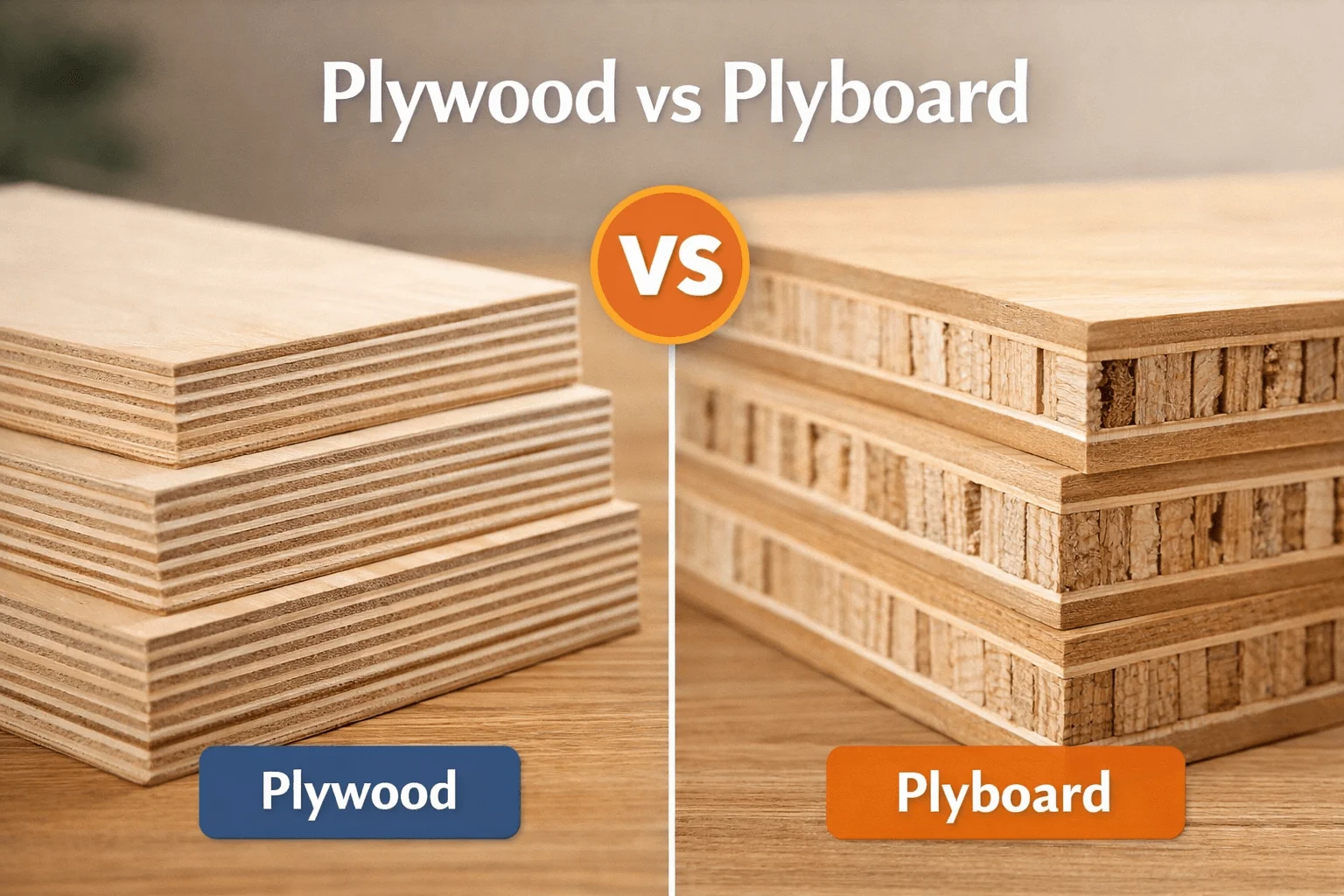
Before comparing materials, it helps to clearly define plywood and understand why it forms the base of quality interiors. Plywood is an engineered wood panel made by bonding multiple thin wood layers into one solid sheet. It offers a stable and dependable alternative to solid wood and is valued for its consistent quality.
Its structure explains the difference between plywood and wood, especially in how each responds to moisture and temperature changes. While solid wood can expand, shrink, or warp with changes in temperature and moisture, plywood remains more stable indoors. This structural balance is why plywood delivers better long-term performance in furniture, cabinets, and interior applications.
Key Features
High strength and durability: Plywood feels solid and sturdy because its layered build shares weight evenly. It handles daily wear, heavy storage, and frequent use without losing shape.
Excellent screw-holding capacity: Plywood grips screws tightly. Hinges, handles, and fittings stay firm for years, which reduces loosening and repairs over time.
Resists warping and sagging: Because the wood grains run in different directions, plywood does not bend or sag easily. This keeps doors aligned and cabinets straight, even after long use.
Available in Different Grades for Different Needs: Plywood comes in grades based on moisture exposure.
- MR (Moisture Resistant): Best for dry indoor spaces with low moisture. Suitable for bedrooms, living rooms, study units, and decorative furniture. Handles normal humidity but not direct water exposure.
- BWR (Boiling Water Resistant): Designed for areas with regular moisture or steam. Ideal for kitchens, bathroom cabinets, and utility units. Resists water better than MR and retains strength with daily use.
- BWP / Marine Plywood: Offers the highest water resistance using premium adhesives. Perfect for sink units, bathroom vanities, and humid or coastal homes. Ensures long-term durability in wet conditions.
Best Applications
- Modular kitchens, cabinets, and storage units.
- Wardrobe framework
- Bed frames
- Doors and heavy furniture
What is Plyboard?
Plyboard is an engineered wood panel with a core of solid wood strips, covered with veneer sheets on both sides. It is lighter than plywood and stays flat over large spans, which reduces stress on hinges and hardware. Its structure helps minimise internal stress and suits situations where heavy load-bearing strength is not required.
Key Features
- Lightweight: Plyboard is lighter than plywood, making it easier to handle and move during installation.
- Hinge-friendly: Its reduced weight puts less stress on hinges and hardware, helping shutters and doors last longer.
- Easy to work with: Plyboard cuts, drills, and shapes easily, allowing smooth customization for panels, partitions, and cabinets.
- Grades available: Mainly comes in MR (Moisture Resistant) and BWR (Boiling Water Resistant) for normal indoor use and moderate moisture areas.
Best Applications
- Wardrobe shutters
- Wall panelling
- Room partitions
- Bookshelves
- Large cabinet shutters
Plywood vs Plyboard: Main Differences
Now that both materials are clear individually, let’s break down the real difference between ply and board across everyday interior needs.
| Feature | Plywood | Plyboard |
| Strength & Durability | Plywood handles heavy loads with ease. It supports beds, kitchen cabinets, and storage units without bending. | Plyboard works better for lighter applications where the surface area is large but the load stays low. |
| Weight | Plywood feels dense and heavy. That density gives it strength but also adds pressure on hinges. | Plyboard stays much lighter, which makes it ideal for tall or wide shutters that open daily. |
| Moisture Resistance | Plywood performs far better in wet zones, especially in BWR and BWP grades. | Plyboard needs caution around sinks, cooking areas, or damp walls, even when labelled moisture-resistant. |
| Screw-Holding Capacity | Plywood grips screws firmly and holds hardware securely for years. | Plyboard offers average screw retention, which limits its use in structural parts. |
| Workability & Finish | Plywood allows precision joinery and complex detailing. | Plyboard delivers clean cuts and smooth surfaces for large panels and flat designs. |
| Cost Comparison | When comparing ply vs board, plywood costs more, particularly in marine grades. | Plyboard stays budget-friendly for non-load-bearing areas. This cost difference often drives confusion between plywood vs plyboard, even though usage should decide first. |
Plywood vs Plyboard- Pros and Cons Comparison Table
| Feature | Plywood | Plyboard |
| Strength | High | Moderate |
| Weight | Heavy | Light |
| Moisture Resistance | High (BWR/BWP) | Moderate |
| Screw Holding | Excellent | Average |
| Cost | Higher | Lower |
| Best Use | Kitchens, beds, carcass | Shutters, panels |
Cost Comparison – India (2026)
The price of plywood and plyboard depends on several factors that determine quality, durability, and suitability for different applications.
- Plywood MR: ₹70-95 per sq. ft. The cost is lower because it uses standard-quality veneers, basic adhesives, and fewer layers, suitable for dry interiors.
- Plywood BWR/BWP: ₹120-160 per sq. ft. Higher prices reflect stronger adhesives, multiple layers, and special treatments that make the board resistant to water, heat, and long-term wear.
- Plyboard: ₹60-90 per sq. ft. It is lighter and simpler to manufacture, which keeps costs lower than plywood.
Note: In short, the rates are influenced by the quality of wood, the number of layers, the type of adhesive, moisture resistance, and the manufacturing process.
Common Mistakes Homeowners Make
Many homeowners make choices that seem economical at first but can lead to damage, repairs, or reduced lifespan of furniture. Common mistakes include:
- Using plyboard in kitchens or wet areas: Plyboard cannot handle prolonged moisture, which can cause swelling, warping, and damage to cabinets.
- Choosing non-ISI plywood to save money: Low-quality or uncertified plywood may use inferior adhesives and veneers, leading to weaker boards and early wear.
- Using thin boards for heavy furniture: Thin panels may sag or break under weight, reducing the durability of beds, cabinets, and wardrobes.
- Avoiding material combinations where needed: Relying on only one material instead of mixing plywood for strength and plyboard for lightness can increase cost and reduce functionality.
Expert Recommendations
Based on decades of interior design experience, these practical tips help you choose the right material for each application and avoid common mistakes:
- Always choose BWP plywood for cabinets and shelves. Investing in this grade ensures long-term durability, moisture resistance, and hassle-free use.
- Combine plyboard for shutters and plywood for door frameworks. This mix keeps doors light and easy to operate while the frame remains strong and stable.
- Stick to reputed, certified brands. Consistent quality and proper manufacturing ensure safety, reliability, and a better finish for all furniture and interiors
Conclusion
Plywood delivers strength, moisture resistance, and long-term durability. Plyboard offers lightness, stability across large panels, and sensible cost savings. When you understand where each material fits, confusion disappears.
If you want interiors that look great today and perform just as well years later, the right material choice matters. At Purva Streaks, we help you select plywood and plyboard based on real usage, not assumptions. Speak with our interior experts today and build a home that feels solid, functional, and future-ready.
FAQ’s
1. Which is stronger: plywood or plyboard?
Plywood is generally stronger than plyboard. Its cross-layered veneer construction provides better load-bearing capacity and resistance to bending, making it suitable for heavy-duty applications.
2. Is plywood more durable than plyboard?
Yes, plywood is usually more durable. It performs better in long-term use, especially in furniture that carries weight or faces frequent use, whereas plyboard is better suited for lighter applications.
3. Which material is better for furniture making?
Plywood is preferred for furniture like beds, sofas, and cabinets because of its strength and stability. Plyboard is often used for wardrobes, partitions, and panels where less structural strength is required.
4. Is plyboard lighter than plywood?
Yes, plyboard is lighter than plywood. This makes it easier to handle and install, especially for vertical applications such as wardrobes and wall partitions.